
Imagine rounding a bend in an acacia woodland. You look up, not down. There, stretched lazily along a thick branch, is a lioness, paws dangling ten meters above the ground. It’s one of the most delightfully unexpected sights in Africa. And it’s a signature of Lake Manyara National Park. Certainly, this compact gem on Tanzania’s northern circuit has a habit of surprising even seasoned safari-goers.
Lake Manyara National Park sits at the foot of the Great Rift Valley escarpment. Despite its small size, it packs in an astonishing variety of landscapes and wildlife. There’s a shimmering soda lake fringed with pink flamingos. Behind it rise lush groundwater forest, open floodplains, and that towering green wall of the Rift. In this guide, you’ll discover what makes the park so special. We’ll cover the wildlife, the best things to do, when to visit, and how Lake Manyara fits into an unforgettable Tanzania safari.
Where Is Lake Manyara National Park?
Lake Manyara National Park sits in northern Tanzania. It’s cradled between the dramatic Rift Valley escarpment and the shores of its namesake alkaline lake. Importantly, it lies a comfortable drive from Arusha, the gateway town for most northern-circuit safaris. As a result, it makes a natural first stop on the road toward the Ngorongoro Crater and the Serengeti.
The park is small. It covers around 330 square kilometers, and roughly two-thirds of that is the lake itself. Yet that compactness is part of its magic. In a single morning’s game drive, you can move from dense, shadowy forest to open grassland. Then you reach the breezy edge of a vast soda lake. Few parks anywhere offer so much variety in such a short distance. For that reason, many travelers describe Lake Manyara as the surprise highlight of their trip.
What Is Lake Manyara National Park Famous For?
Lake Manyara National Park is famous for three things above all: its tree-climbing lions, its spectacular flamingos, and its enormous troops of baboons. Most lions across Africa are ground dwellers. However, the prides here regularly lounge in the branches of acacia and sausage trees. It’s a rare behavior shared with only a handful of places on the continent. Meanwhile, the shallow soda lake draws giant gatherings of flamingos. The park is also said to hold one of the largest baboon populations on earth.
So why do Manyara’s lions climb? Nobody knows for certain. As Tanzania safari experts have noted, there are several leading theories. Some suggest the lions escape biting insects on the ground. Others point to the cooling breeze or a better view of prey across the plains. Whatever the reason, spotting a lion draped in a tree stays with you for life.
The Remarkable Wildlife of Lake Manyara
For such a small park, the biodiversity here is genuinely incredible. In fact, Lake Manyara rewards patient, curious travelers with a richer cast of characters than its size suggests.
Tree-Climbing Lions
Of course, these are the headliners. Of course, seeing them takes a little luck and a lot of expertise. After all, a guide who knows the pride’s favorite trees can really enhance the experience. That kind of guiding is something Asanja Africa guests know well. For example, one traveler named Tom recalled his guide, Sharifu, who has sixteen years of experience. In fact, Sharifu tracked down not only the Big Five but also rarer creatures like the elusive serval. The same sharp eyes that find a serval are what turn a hopeful drive into an encounter with a lion in the branches.
Flamingos and a Birder’s Paradise
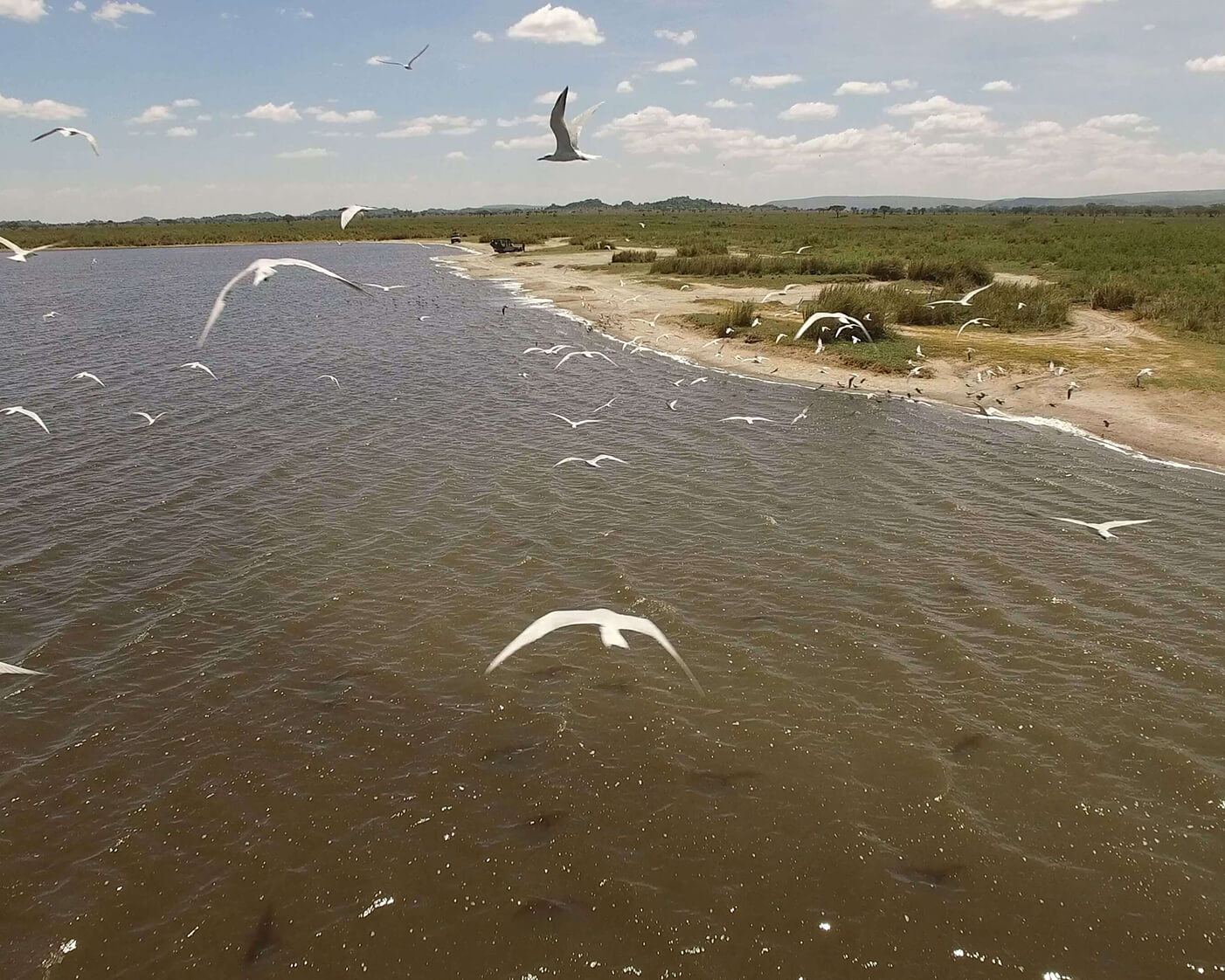
When conditions are right, the lake blushes pink with flamingos. By some estimates, the shallows attract close to 1.9 million flamingos feeding on the lake’s algae. Likewise, they are part of a wider population of millions of waterbirds. Moreover, the park has more than 400 recorded bird species, including pelicans, storks, and herons. As a result, Lake Manyara ranks among Tanzania’s finest birding destinations.
Elephants, Hippos and the Forest
Beyond lions and flamingos, the park teems with other wildlife. Large elephant herds drift through the groundwater forest and along the lakeshore. In addition, pods of hippos wallow in the Hippo Pool. Meanwhile, giraffes, buffalo, and zebras roam the plains. Similarly, the shady forest near the entrance shelters blue monkeys, bushbuck, and the park’s celebrated baboons. Indeed, these baboons gather in troops described as among the largest concentrations in Africa. Altogether, it adds up to a wonderfully layered safari experience.
The Best Things to Do in Lake Manyara National Park
On the open plains, you mostly stay in your vehicle. Lake Manyara is different. In fact, it invites you to get closer to the wild in several ways.
Game Drives
First, morning and late-afternoon game drives are the heart of any visit. At these times, the light is golden and the animals are most active. While you drive, you’ll trace the forest tracks, skirt the lakeshore, and scan the acacias overhead for those famous lions.
The Treetop Canopy Walkway
One of Manyara’s most distinctive experiences is its treetop walkway. It’s a 370-meter suspended bridge sitting around 18 meters above the forest floor. As Tanzania’s first airwalk, it lets you stroll through the canopy at eye level with birds and monkeys. Overall, it’s a thrilling, gentle way to stretch your legs mid-safari.
Night Game Drives
Here’s a true rarity. Lake Manyara is one of the few northern-circuit parks that permits night game drives. Then, after dark, a whole new world emerges. For example, porcupines, civets, genets, and bush babies appear in the spotlight. Meanwhile, the lions shift into active hunting mode. It’s an unforgettable experience that most Tanzanian parks simply can’t offer.
Canoeing and Birding
When water levels allow, gentle canoe safaris become possible. Soon, you glide along the lake’s edge among hippos, flamingos, and pelicans. Altogether, it’s a peaceful, low-angle perspective on the wildlife Manyara is known for.
When Is the Best Time to Visit Lake Manyara National Park?
The best time to visit Lake Manyara National Park depends on what you want to see. For general game viewing and tree-climbing lions, the dry season from June to October is ideal. During these months, wildlife concentrates around water, and thinner vegetation makes animals easier to find. For flamingos and prolific birdlife, however, the wetter months from November to May are the stronger window.
In short, dry season suits mammals, while green season suits birds. Because Lake Manyara is compact and rewarding year-round, there really is no wrong time to come. Moreover, pairing it with the wider northern circuit helps you plan the perfect route. After all, the Serengeti and Ngorongoro have their own seasonal highlights.
Planning Your Visit to Lake Manyara
A little planning turns a quick stop into a genuine highlight of your journey.
Getting There and Park Fees
You can easily reach Lake Manyara by road from Arusha. As a result, it makes a natural first or last stop on a northern-circuit safari. Park entry fees for non-resident adults sit at roughly $50 per person per 24 hours, plus 18% VAT. In addition, children aged 5–15 pay reduced rates, and under-fives enter free. Optional activities like the canopy walkway and night drives carry separate fees. Rates change periodically, so confirm the current figures before you travel.
How Long Should You Stay?
A half-day rush doesn’t do Manyara justice. Instead, stay at least one night near the park. That way, you get both an early-morning and a late-afternoon drive. It also leaves room for the canopy walk or a night drive. To see how Manyara slots in, our Tanzania safari itinerary guide maps out classic 5, 7, and 10-day routes.
Where Lake Manyara Fits on a Northern-Circuit Safari
Manyara pairs beautifully with its neighbors. For instance, many travelers combine it with the elephant-rich plains of Tarangire National Park. After that, they head to the wildlife amphitheater of a Ngorongoro Crater safari before continuing to the Serengeti. Together, these national parks form one of the most rewarding safari routes on earth. Our team can weave them into a seamless luxury Tanzania safari tailored to you.
Is Lake Manyara National Park Worth Visiting?
Absolutely. In fact, it’s often the park that guests rave about most afterwards. True, it doesn’t have the sheer scale of the Serengeti. However, Lake Manyara offers something different. Rather, it delivers incredible biodiversity in a compact, scenic package. On top of that, it offers experiences you can’t easily have elsewhere, like a treetop canopy walk and a guided night drive. As a result, it’s ideal for first-time safari-goers, birders, and families. As a gateway to the northern circuit, it sets the tone for an extraordinary adventure.
People Also Ask
- Are there tree-climbing lions in Lake Manyara National Park?
Yes. Lake Manyara is one of the few places in Africa where lions regularly rest in tree branches. Sightings aren’t guaranteed, but the park is among the best spots in Tanzania to look for this rare behavior. - How big is Lake Manyara National Park?
The park covers roughly 330 square kilometers. About two-thirds of that is the shallow alkaline lake. Despite its small size, it still packs in forest, grassland, woodland, and lakeshore habitats. - Can you do night drives in Lake Manyara?
Yes. Lake Manyara is one of the few parks on the northern circuit that permits guided night game drives. As a result, you can spot nocturnal animals like genets, civets, and bush babies. - Is Lake Manyara good for birdwatching?
Yes, it’s excellent. The park has more than 400 recorded bird species. In addition, giant gatherings of flamingos and other waterbirds visit the lake, especially in the wetter months. - How far is Lake Manyara from Arusha?
Lake Manyara is an effortless road trip from Arusha. Because Arusha is the main gateway town for northern-circuit safaris, the park makes a natural first stop on the way to Ngorongoro and the Serengeti.
Frequently Asked Questions
- What is Lake Manyara National Park best known for?
It’s best known for its tree-climbing lions and its flamingo-filled soda lake. In addition, the park is famous for large elephant herds and some of the biggest baboon troops in Africa. - When is the best time to visit Lake Manyara?
The dry season, from June to October, is best for general game viewing and tree-climbing lions. The wetter months, from November to May, are ideal for flamingos and birdwatching. - How long should I spend at Lake Manyara?
Plan for at least one night nearby. This gives you both an early-morning and a late-afternoon game drive. It also leaves time for the treetop walkway or a night drive. - How much does it cost to enter Lake Manyara National Park?
Entry is roughly $50 per adult non-resident per 24 hours, plus 18% VAT. Also, children aged 5–15 pay reduced rates. Optional activities carry separate fees, and rates change periodically, so confirm current figures before you travel. - Is Lake Manyara worth adding to a Tanzania safari?
Yes. Ultimately, its scenery, biodiversity, and unique experiences make it a rewarding stop. Moreover, it’s an ideal gateway to the rest of the northern circuit.
Plan Your Lake Manyara Safari with Asanja Africa
Lake Manyara National Park proves a simple point. The most memorable safari moments don’t always come from the biggest places. Tree-climbing lions, a lake turned pink with flamingos, and a canopy walk through ancient forest all sit framed by the towering Rift Valley. Together, they make this little park a genuine northern-circuit treasure.
Perhaps you’re dreaming of weaving Lake Manyara into a once-in-a-lifetime journey through Tanzania. If so, our team would love to help. We craft personalized, expert-guided safaris that place you close to the wild in comfort and style.
Ready to begin? Plan Your Tanzania Safari and let us design an adventure you’ll never forget.