
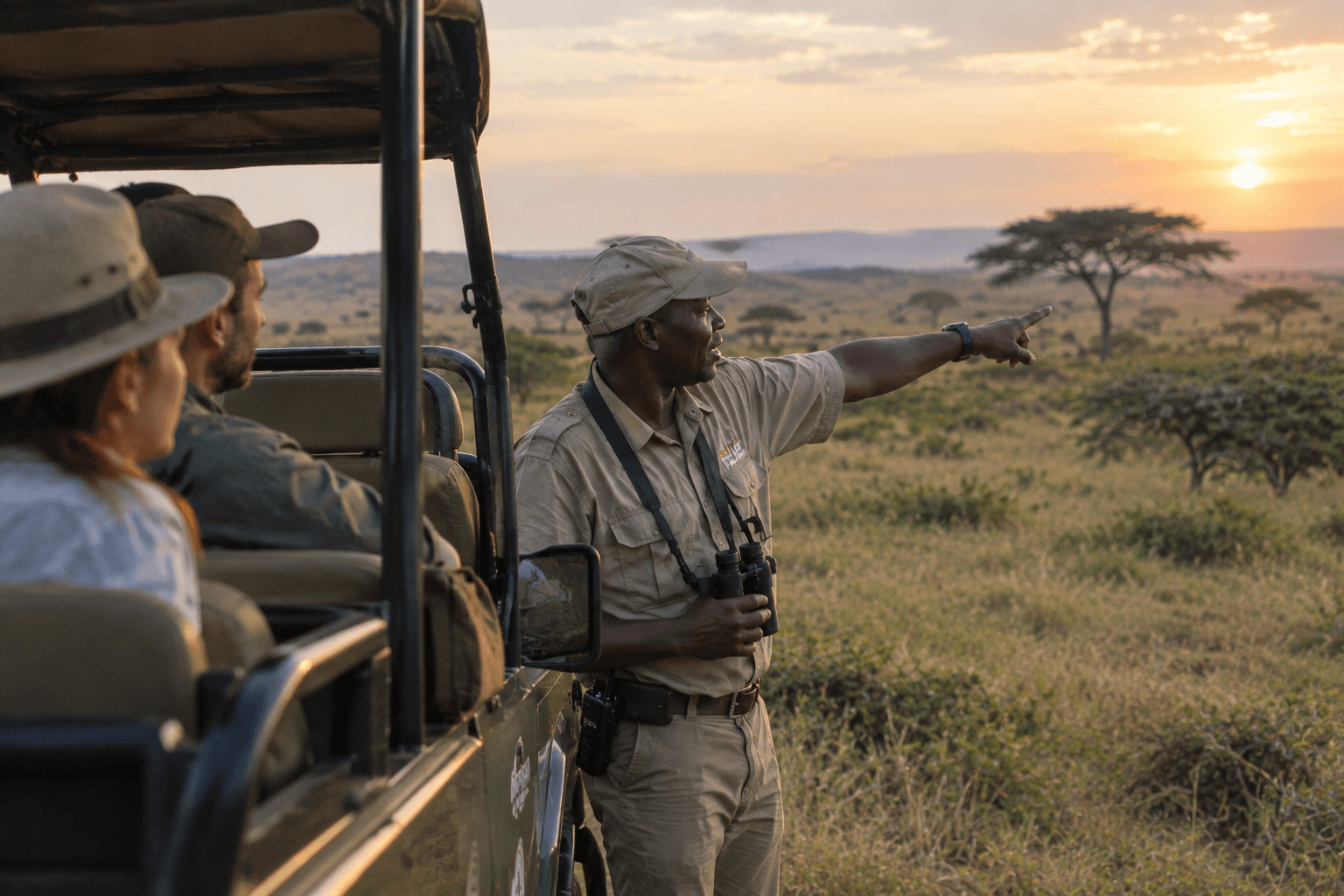
Choosing a Tanzania safari operator is the single decision that shapes everything else about your trip. Two companies can quote you the same “5-day Serengeti safari” and deliver entirely different experiences, one with a private vehicle and an experienced guide, the other with a crowded shared truck and a driver who’s never actually studied wildlife behavior. Since most travelers only do this once, it’s worth knowing exactly what separates a great Tanzania safari operator from a mediocre one before you hand over a deposit.
Here are the seven questions that actually matter when you’re comparing options.
1. Is the Tanzania Safari Operator Locally Based or Just a Reseller?
Many websites advertising Tanzania safaris are actually booking agents based in Europe or North America who resell trips run by a local ground operator you’ll never speak to directly. That’s not automatically bad, but it usually means a markup, slower communication, and less control if something needs to change last minute.
Ask directly: “Who runs the vehicles and guides on the ground?” A genuine Tanzania safari operator should be able to name their guides, describe their own vehicle fleet, and tell you exactly which camps they have direct relationships with, not just a list pulled from a booking platform.
2. What’s Actually Included in the Quoted Price?
This stage is where a lot of comparison shopping goes wrong. A Tanzania safari operator quoting $1,200 per person and one quoting $1,800 per person for the “same” 5-day trip usually aren’t comparing like-for-like. Always ask specifically:
- Are park entrance fees included or added later?
- Is the vehicle private or shared with other travelers?
- How many meals are provided each day, and do they include drinks?
- Are airport transfers included?
- What’s the single supplement if you’re traveling solo?
A cheaper-looking quote that adds park fees and transfers afterward can end up pricier than the operator who was upfront about the full cost from the start.
3. How Experienced Are the Guides?
The guide makes or breaks a safari more than the camp does. A good Tanzania safari operator invests in guide training and keeps experienced guides on staff for years, rather than cycling through seasonal hires. Ask how long their guides have worked for them and whether they hold formal certification (Tanzania has a recognized guide-grading system through TALA, the Tanzania Association of Tour Operators).
A guide who can read animal behavior, knows where to position the vehicle for a sighting without disturbing wildlife, and can answer detailed ecology questions is worth more than any extra camp amenity.
4. What Do Recent, Verifiable Reviews Say?
Look past the testimonials on the operator’s own website; those are cherry-picked by definition. Check TripAdvisor and Google reviews instead, and read the 3-star reviews specifically, not just the 5-star ones. Middling reviews tend to reveal the real operational issues, delayed pickups, a guide who seemed checked out, and food that didn’t match what was promised, more honestly than glowing ones do.
Also check how recent the reviews are. A Tanzania safari operator with great reviews from 2021 but no recent reviews may have changed ownership, staff, or quality since then.
5. Can They Customize the Itinerary, or Is It Fixed?
Some operators run a small set of fixed departure itineraries; others build every trip around your specific dates, interests, and budget. Neither approach is wrong; fixed departures are often cheaper since costs are shared across a group, but you should know which one you’re booking before you commit.
If you have specific priorities (photography, a particular migration stage, a family with young kids, a honeymoon), ask directly whether the itinerary can flex around that or whether you’re locking into a template.
6. What Happens If Something Goes Wrong?
Weather delays, vehicle breakdowns, and flight changes happen on safari. Ask your Tanzania safari operator what their contingency plan looks like: Do they have backup vehicles? Is there a 24/7 contact number while you’re in-country? What’s their cancellation and refund policy?
An operator who answers your questions clearly and specifically, rather than vaguely reassuring you, “Don’t worry, it’ll be fine,” is one who has actually dealt with these situations before.
7. Do They Give Back to the Areas They Operate In?
This isn’t just an ethical nice-to-have; it’s a genuine signal of a well-established Tanzania safari operator. Companies with real, long-term relationships with local communities and conservation projects tend to also have the strongest relationships with camps, guides, and park authorities, the same relationships that make your actual trip run smoothly.
Ask whether they support any local conservation or community initiatives and whether their guides and staff are primarily Tanzanian nationals rather than an outsourced or seasonal international crew.
Putting It Together
Here’s a quick way to score any Tanzania safari operator you’re considering:
| Question | Green Flag | Red Flag |
|---|---|---|
| Locally based? | Names own guides and vehicles | Vague about who runs the ground trip |
| Pricing | Fully itemized upfront | Fees added after the quote |
| Guides | Long-tenured, certified | High turnover, no certification mentioned |
| Reviews | Recent, consistent across platforms | Old reviews or big gaps in dates |
| Customization | Clear about flexible vs. fixed | Won’t answer directly |
| Contingency plan | Specific answer | Vague reassurance only |
| Local ties | Named conservation/community links | No mention at all |
How BookMeAfrica Measures Up
We’re a locally grounded Tanzania safari operator, which means the guides and vehicles on your trip are ours, not a subcontracted third party. Pricing is itemized upfront so there are no surprise add-ons after you’ve already committed, and every itinerary can be built around your dates and priorities rather than forced into a fixed template.
If you’re comparing operators right now, our Tanzania Safari Cost Guide is a good next stop to see real, itemized price ranges across budget, mid-range, and luxury tiers, so you can hold any quote you receive up against a realistic benchmark.
Plan Your Trip
Comparing operators takes time, but it’s worth getting right before you commit. Get in touch with our team for a transparent, itemized quote built around your dates and priorities.
General FAQs
Check that they're registered with TALA (Tanzania Association of Tour Operators), look for recent third-party reviews on Google and TripAdvisor, and confirm they can name their guides and vehicles rather than deferring to a subcontractor.
Booking directly with the ground operator usually costs less since there's no reseller markup and gives you more direct communication. A good agent can still add value if you want help comparing multiple destinations, not just Tanzania.
Ask what's included in the price, who runs the vehicles and guides, what their cancellation policy is, and what their contingency plan is for weather or vehicle issues.
Costs range from around $150 per person per day for budget camping safaris to $1,500 or more per day for luxury tented camps, depending on accommodation tier, season, and group size.
Not always. A lower quote that later adds park fees, transfers, or a shared vehicle can end up costing the same or more than a transparent operator's upfront price, with a lower-quality experience.
No. Always ask directly, since some budget operators list park fees as a separate add-on rather than including them in the headline price.