Lions in Serengeti: Complete Guide to Lions, Safaris & Best Time to See Them
If seeing lions in the wild is high on your travel bucket list for Africa, the Serengeti is one of the best places to experience these magnificent big cats. From large prides resting under acacia trees to lions watching herds of wildebeest move across the plains, a Serengeti lion safari can offer some of the most memorable wildlife encounters in Tanzania.
The Serengeti is famous for its enormous wildlife population, open grasslands, rocky kopjes, and the annual Great Migration. These conditions provide lions with abundant prey and various habitats where they can hunt, rest, raise cubs, and establish territories.
In this guide, we’ll explain where to see lions in Serengeti, the best time to visit, how lion prides behave, what they eat, and how to plan a safari focused on these iconic predators.
What Makes Lions in Serengeti So Special?
Lions in Serengeti are one of the park’s most iconic wildlife attractions, with thousands of lions living across the Serengeti ecosystem. The abundance of prey, open landscapes, permanent water sources, and rocky kopjes creates excellent conditions for lion populations.
Unlike many wildlife destinations where spotting a lion can require considerable luck, the Serengeti offers regular opportunities to see them throughout the year.
Lions can often be found resting during the heat of the day and becoming more active during the cooler hours of the morning and evening.
For travelers planning their first African safari in Tanzania, seeing a lion in its natural habitat is often one of the most anticipated experiences.
How Many Lions Are in the Serengeti?
Estimates vary depending on whether researchers are referring to the Serengeti National Park itself or the wider Serengeti ecosystem.
The wider ecosystem supports several thousand lions, making it one of the important lion habitats in Africa.
Lions live across different areas of the ecosystem, and their numbers and locations can change depending on prey availability, water, seasonal conditions, and movements of migrating herbivores.
This variability is one reason why every safari can feel different. A location that produced an excellent lion sighting one week may not have the same activity later.
Where to See Lions in Serengeti
The Serengeti is a giant ecosystem, so knowing which areas are particularly productive can help you plan your safari.
1. Central Serengeti and Seronera
The Central Serengeti, particularly the Seronera area, is one of the most reliable regions for lion sightings.
The area combines grasslands, rocky outcrops, river systems, and abundant prey. You can frequently see lions resting near trees, on open plains, or around rocky kopjes.
Seronera is also a popular base for travelers who are keen to explore different parts of the Serengeti.
If your primary goal is wildlife viewing, spending several nights in central Serengeti can increase your chances of observing lions in different situations.
2. Serengeti Kopjes
Kopjes are large granite rock formations scattered throughout the Serengeti.
They provide excellent viewpoints for predators. Lions may climb onto the rocks to rest, observe their surroundings, or escape the heat of the ground.
These rocky formations can also make lion sightings particularly dramatic.
Imagine a lioness sitting on top of a kopje while the endless Serengeti plains stretch behind her. It is the kind of scene that makes the Serengeti so recognizable.
3. Southern Serengeti and Ndutu
The southern Serengeti and Ndutu region can be especially interesting during the period when wildebeest gather for calving.
Large concentrations of herbivores provide predators with increased hunting opportunities.
Lion activity can therefore be excellent when prey numbers are concentrated in a relatively small area.
For travelers interested in combining wildlife viewing with the seasonal movements of the Great Migration, the southern Serengeti can be an excellent addition to a Tanzania itinerary.
4. Northern Serengeti
Northern Serengeti offers another excellent opportunity to see lions.
During periods when large herds move through the northern areas, predators may follow the available prey.
The landscape also differs from central Serengeti, with more rolling terrain and areas of woodland.
A longer safari that includes central, northern, or southern regions can give you a broader understanding of how lions use different habitats.
When is the best time to see lions in the Serengeti?
One of the biggest advantages of a Serengeti lion safari is that lions can be seen throughout the year.
However, certain seasons can provide different types of experiences.
January to March
The southern Serengeti and Ndutu region can become particularly captivating during the calving period.
Large numbers of wildebeest and other herbivores concentrate in the area, creating increased opportunities for predator sightings.
This period can be excellent for travelers interested in both young animals and predator activity.
April to May
The green season brings lush landscapes and fewer visitors in many areas.
Rain can make some roads more challenging, but the scenery can be beautiful.
Lions remain present, and the abundance of wildlife means there can still be rewarding sightings.
June to October
The dry season is widely considered one of the strongest periods for general wildlife viewing.
As vegetation becomes less dense and animals gather around available water sources, spotting wildlife can become easier.
This period also overlaps with important phases of the Great Migration.
November to December
Short rains can transform the landscape, bringing fresh vegetation.
Wildlife remains active, and the changing scenery can create a different Serengeti experience compared with the dry season.
What Do Lions in Serengeti Eat?
Lions are apex predators, and their diet mainly consists of medium-to-large herbivores.
Depending on availability, they may prey on:
- Wildebeest
- Zebra
- Buffalo
- Gazelle
- Antelope
- Warthog
- Other suitable prey
The annual migration is particularly important because millions of herbivores move through the Serengeti ecosystem.
This enormous supply of prey helps support the Serengeti’s predator populations.
However, lions do not simply follow the migration all year. They are territorial animals and may remain in established areas where resident prey is available.
How Do Lions Hunt in the Serengeti?
Lions are powerful predators, but hunting is not always successful.
They often rely on stealth, patience, and positioning rather than simply chasing prey across long distances.
Lionesses generally perform much of the hunting within a pride.
A group may approach prey carefully before making a short, powerful chase.
The open Serengeti plains can make stalking difficult because prey animals have excellent visibility. Lions therefore benefit from tall grass, bushes, rocky terrain, and darkness.
Early morning and evening are particularly interesting times to watch lion behavior because temperatures are cooler and lions are naturally more active.
Understanding a Serengeti Lion Pride
Lions are social cats, unlike most other large cats.
A pride can include related females, cubs, and one or more adult males.
However, pride structure is not fixed.
Lion groups can change over time as individuals mature, disperse, join other groups, or take over territories.
Researchers have also observed fission-fusion behavior, meaning larger groups may split into smaller groups and later come back together.
This can make lion behavior fascinating to observe during a safari.
Male Lions vs. Lionesses
Adult male and female lions have different roles within the pride.
Male Lions
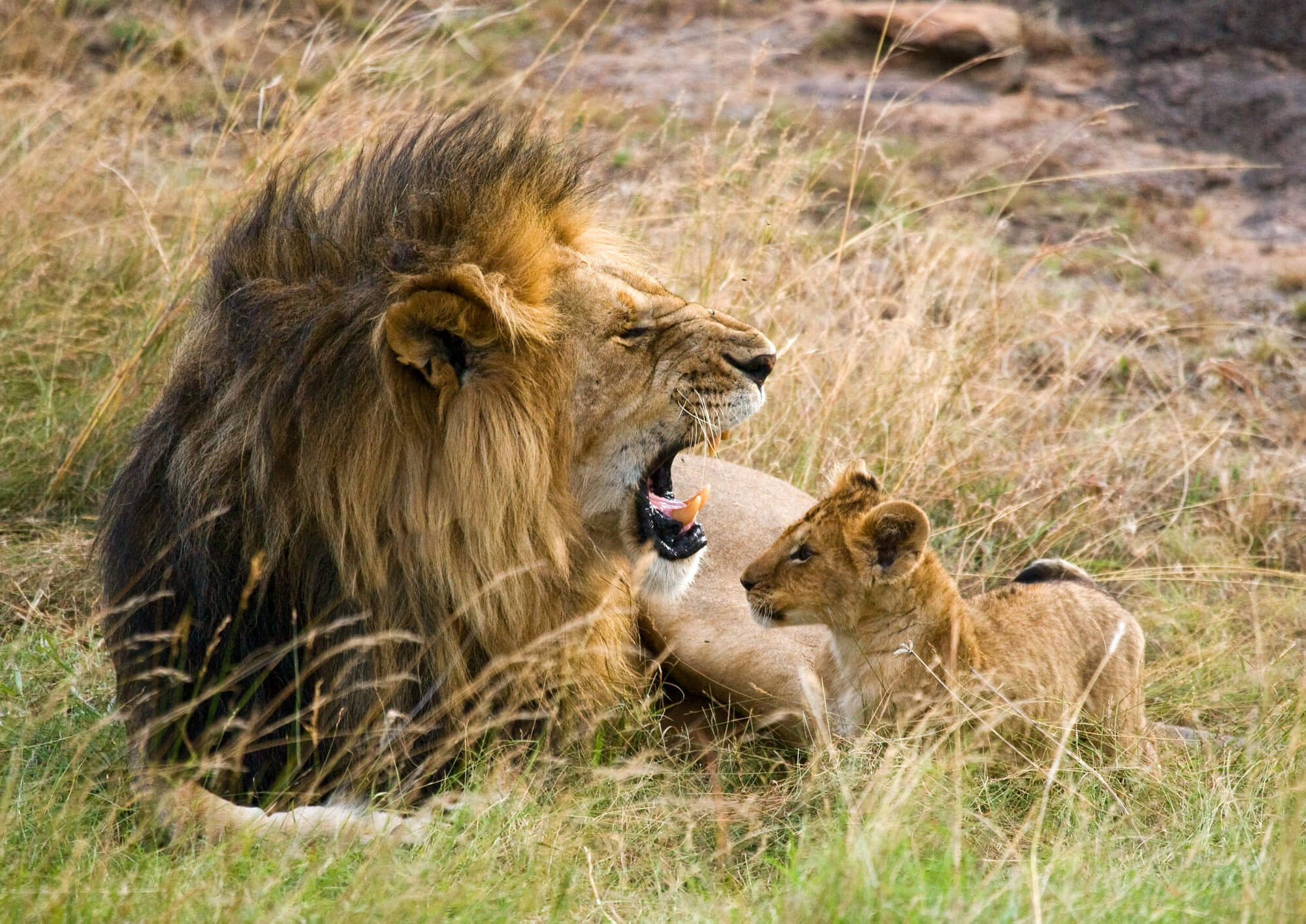
Adult males are recognizable by their manes, although mane size and appearance vary between individuals.
Males play an important role in protecting territory and pride members from rival males.
They may also participate in hunts, particularly when larger prey is involved.
Lionesses
Lionesses generally do much of the hunting.
They are highly coordinated predators and may work together when targeting suitable prey.
Lionesses also play a major role in raising cubs.
Watching a group of lionesses move through the grasslands together can be one of the highlights of a safari.
Lions and the Great Migration
The relationship between lions and the Great Migration is one of the reasons the Serengeti ecosystem is so productive for predators.
Every year, huge numbers of wildebeest, zebra, and other herbivores move through different parts of the ecosystem in response to rainfall and fresh grazing.
Lions can take advantage of these seasonal concentrations of prey.
However, migration timing is not perfectly predictable.
Rainfall patterns and grazing conditions can influence where herds are located, meaning wildlife movements can vary from one year to another.
For travelers hoping to combine predator viewing with migration activity, flexibility is important.
Lions as Part of the Big Five
The lion is one of Africa’s famous Big Five animals, along with the leopard, elephant, rhinoceros, and buffalo.
A safari focused on lions can therefore also become a broader Big Five experience.
If seeing several iconic African species is your goal, consider planning your itinerary around multiple habitats rather than focusing exclusively on one animal.
Our guide to Big 5 Safari Africa can help you understand how lion sightings fit into a wider African wildlife adventure.
Lions and Other Serengeti Wildlife
One of the best things about visiting the Serengeti is that you are never guaranteed to see just one species.
While looking for lions, you may also encounter:
- Wildebeest
- Zebra
- Elephants
- Giraffes
- Buffalo
- Hippos
- Hyenas
- Cheetahs
- Leopards
- Gazelles
- Warthogs
- Numerous bird species
This diversity makes Serengeti of Tanzania an excellent destination for travelers who want a complete wildlife experience rather than a single-animal safari.
Best Time of Day to See Lions
If you want to improve your chances of observing active lions, early morning and late afternoon are generally excellent times for game drives.
During the middle of the day, temperatures can become extremely high.
Lions often respond to the heat by resting in shade or lying on the ground.
Early morning drives can reveal lions returning from nighttime activity, while afternoon drives may show them becoming more alert as temperatures fall.
Your safari guide can also adjust the route based on recent wildlife sightings and local conditions.
Can You See Lions From a Hot Air Balloon?
A hot air balloon safari offers a completely different way to experience the Serengeti.
From above, you can appreciate the enormous scale of the plains and observe wildlife from a unique perspective.
While a balloon flight should not be treated as a guaranteed lion-viewing experience, seeing animals moving across the landscape from the air can be unforgettable.
For more information, explore our guide to Hot Air Balloon Safari in Tanzania.
Is a Serengeti Lion Safari Good for Families?
Yes. A Serengeti safari can be an incredible family experience when the itinerary is designed around the ages and interests of the children.
Families should consider shorter game drives, comfortable accommodation, suitable travel times, and activities that keep younger travelers engaged.
A Family & Kids Safari can introduce children to wildlife, conservation, geography, and African ecosystems in a way that feels exciting rather than like a classroom lesson.
Lions on a Tanzania Honeymoon Safari
For couples, seeing lions together can be one of the most memorable experiences of a Tanzania honeymoon.
A Tanzania honeymoon package itinerary can combine wildlife viewing with comfortable stays, beautiful landscapes, and time to relax between game drives.
A Honeymoon Safari can also be customized around the couple’s preferred pace, whether they want an action-packed wildlife adventure or a slower luxury experience.
Lions for Wedding and Romantic Safaris
Tanzania can also be an extraordinary destination for couples celebrating major milestones.
A wedding safari can combine a special celebration with wildlife experiences across the country’s most scenic destinations.
For couples who simply want a romantic adventure, a romantic safari can provide private moments surrounded by some of Africa’s most spectacular landscapes.
Birding and Lion Safaris
Although lions are usually the main attraction for many visitors, the Serengeti is also home to a remarkable variety of birdlife.
Combining predator viewing with a birding safari can make your trip more diverse.
Bird enthusiasts can look for raptors, vultures, storks, eagles, rollers, hornbills, and many other species while traveling through different habitats.
How to Photograph Lions in the Serengeti
You don’t need professional equipment to capture memorable lion photographs.
A few simple tips can make a big difference:
Use early or late light: Softer light can create more atmospheric photographs.
Be patient: Don’t rush from one sighting to another. Lions may become active after resting.
Focus on behavior: A yawn, interaction between cubs, grooming session, or movement through the grass can be more interesting than a simple portrait.
Respect distance: Always follow your safari guide’s instructions and maintain a safe distance from wildlife.
Avoid disturbing the animals: Never ask a driver to chase or crowd a lion simply to get a better photograph.
Responsible wildlife viewing should always come first.
How Many Days Do You Need to See Lions in Serengeti?
There is no guaranteed number of days required to see lions.
However, spending several nights in the Serengeti gives you more opportunities to explore different areas and observe wildlife at different times of day.
A short safari may still produce excellent sightings, but a longer itinerary provides greater flexibility.
Travelers planning a wider Northern Circuit Safari can combine the Serengeti with other major wildlife destinations in northern Tanzania.
You can also explore our guide to the best national parks in Tanzania to help decide which parks to include in your itinerary.
What Should You Expect on a Lion Safari?
A lion safari isn’t simply about finding a lion and taking a photograph.
You may spend time driving through the grasslands before your guide notices tracks, birds behaving unusually, or a group of animals looking toward the same area.
Then comes the moment when a lion appears from the grass.
Sometimes the animal may be sleeping.
Sometimes you may see a mother with cubs.
Other times, you may witness a pride moving together or preparing for a hunt.
Wildlife is unpredictable, and that unpredictability is part of what makes a safari exciting.
People Also Ask About Lions in Serengeti
- How many lions are in the Serengeti?
The wider Serengeti ecosystem supports several thousand lions. Exact numbers vary depending on the area and survey method. - Where is the best place to see lions in Serengeti?
Central Serengeti, particularly the Seronera area, is one of the most reliable regions for lion sightings. Other areas can also be excellent depending on season and prey movements. - What is the best month to see lions in the Serengeti?
Lions can be seen throughout the year. January to March can be excellent around the southern Serengeti during calving, while June to October generally offers strong overall wildlife viewing. - Are lions part of the Big Five?
Yes. The lion is one of Africa’s Big Five animals, alongside leopard, elephant, rhinoceros, and buffalo. - Can you see lions during the Great Migration?
Yes. The concentration of wildebeest and zebra during different stages of the migration can provide excellent opportunities for predator sightings, including lions.
FAQs About Lions in Serengeti
- Are lions easy to see in the Serengeti?
Lions are among the more frequently encountered large predators in the Serengeti, but wildlife sightings are never guaranteed. Experienced guides and spending multiple days in the ecosystem can improve your opportunities. - Are Serengeti lions dangerous?
Lions are wild predators and should always be treated with respect. Safari vehicles provide a safe viewing platform when guests follow their guide’s instructions. Never approach lions on foot or attempt to interact with them. - Do lions hunt during the day?
Lions can hunt at different times, but they are often more active during cooler periods such as early morning, late afternoon, and nighttime. - Do male or female lions hunt more?
Lionesses generally perform most of the hunting within a pride, although males can participate, particularly when larger prey is involved. - Can children see lions on safari?
Yes. A well-planned Family & Kids Safari can be an excellent way for children to experience lions and other African wildlife. The itinerary should be adapted to the children’s ages and comfort.
Plan Your Serengeti Lion Safari
Seeing lions in Serengeti is more than simply checking a famous animal off your bucket list. It is an opportunity to observe one of Africa’s most iconic predators in an ecosystem shaped by migration, seasonal rainfall, abundant prey, and natural competition.
From the plains of central Serengeti to the southern calving grounds and northern landscapes, different parts of the ecosystem can offer different wildlife experiences.
Whether you’re planning an African safari in Tanzania, a family adventure, a honeymoon, a wedding celebration, a birding trip, or a broader Tanzania wildlife itinerary, the Serengeti deserves a place on your travel plan.
Ready to experience the Serengeti for yourself? Plan your Tanzania safari with BookMeAfrica and create an itinerary built around the wildlife, landscapes, and experiences you want to see.